





Introduction
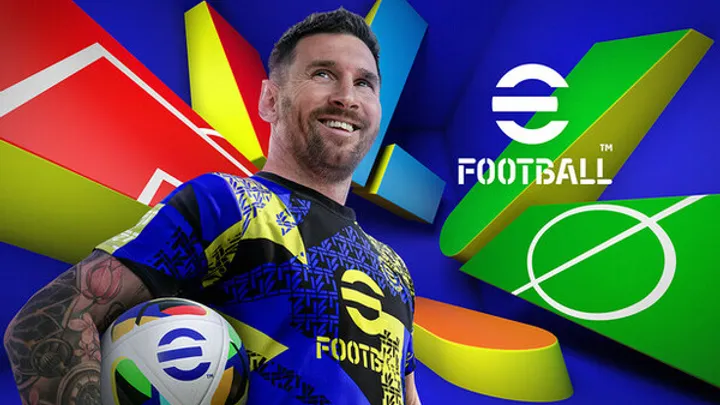
eFootball, Konami’s long-running football simulation series retooled into a live-service free-to-play platform, has long struggled to balance accessibility and competitive integrity. This article examines one specific, high-impact issue in eFootball’s modern era: the matchmaking and skill-weighting system in ranked modes. We’ll analyze how matchmaking algorithms, hidden skill metrics, roster-driven power disparities, and progression systems interact to create unfair competitive ladders, then walk through measurable effects on player retention, monetization distortions, community trust, and practical design alternatives. Each major section explores a distinct facet of the problem and provides focused evidence-based recommendations.

The current matchmaking architecture and its opacity
eFootball’s ranked matchmaking presents as a simple “find opponent” flow, but under the hood it combines multiple opaque inputs: a visible rank or division, hidden skill rating(s), team strength (overall rating of selected roster), and sometimes queued constraints like region or latency. Because Konami does not publish precise formulas, players infer behavior from anecdotal patterns: long waits with poor-match outcomes, sudden rank jumps after a win streak, or frequent mismatches where one side’s selected squad outclasses the other despite equal visible rank.
The opacity becomes consequential when team customization and microtransactions feed into perceived fairness. When the matchmaker accounts for team strength, it necessarily interacts with how much players have invested in star players, rarity cards, or seasonal boosts. That interplay creates a perception — sometimes real — that matches are not purely skill-vs-skill but skill-vs-investment, and because players can’t inspect the algorithm, frustration compounds into accusations of pay-to-win behavior even when the system’s intention was to equalize outcomes.
Hidden skill metrics: problems with single-dimensional ratings
Large-scale competitive systems often use scalar ratings (Elo, Glicko, MMR) to represent player strength. eFootball appears to rely on a combination of visible rank and hidden MMR-style variables. The use of a single composite score to represent a player’s capability is attractive for simplicity, but it breaks down when the game’s outcome space is multi-dimensional: tactical knowledge, mechanical execution, roster composition, and temporal forms of advantage (like stamina or dynamic in-match momentum).
A single-dimensional metric conflates these axes: a player with exceptional tactical awareness but weaker manual skill could share the same rating as a mechanically dominant player with poor tactics, yet they should experience different matchmaking outcomes to produce fair games. When the metric is blind to playstyle or roster-dependence, matchmaking assigns matches that look balanced numerically but are imbalanced in practice, producing lopsided scorelines and player dissatisfaction.
Roster-driven power disparities and the illusion of balance
A central challenge in eFootball is that rosters are not neutral. Player cards or licensed stars have unique stats that meaningfully impact match flow. If the matchmaking uses “team rating” (an averaged stat) as a factor, it reduces complexity into a single number that conceals distributional effects: a team with one superstar and weak supporting cast might be rated identically to a team with uniformly high-mid players, but those teams behave differently during a match.
This matters because roster strategy is itself a skill, and access to high-tier cards can be influenced by microtransactions, seasonal events, or length of tenure. When high-impact players exist behind paywalls or grind gates, even a theoretically fair matchmaker (balancing visible rank plus team rating) can produce competitive imbalances: a lower-ranked player who purchased a superstar might overpower a higher-ranked player who has invested in skill rather than roster. The result is perceived unfairness and a breakdown in the meritocratic promise of ranked play.
Progression systems that distort matchmaking incentives
eFootball’s progression systems — player acquisition mechanics, season rewards, and event-limited cards — shape incentives. When high-rated cards are gated behind seasonal packs or time-limited purchases, players chase meta shifts to remain competitive. The matchmaker responds to rapidly changing population distributions by attempting to balance average team strength, but this leads to several distortions:
- Power spirals: players who acquire better cards win more ranked matches, gain higher MMR, and access better rewards that further improve their roster.
- Sandbagging and smurfing: players intentionally lose or use alternate accounts to face easier opponents and farm rewards, which pollutes the MMR pool and reduces match quality.
- Temporal skew: shortly after a major content drop, populations shift and the matchmaker struggles to form balanced lobbies, causing either long waits or poor-quality matches.
These dynamics incentivize grinding or spending to break through stagnation — a behavior the matchmaker’s design unintentionally amplifies.
The economics of matchmaking: monetization feedback loops
Monetization drives content design in live-service titles. In eFootball, the presence of premium players, special edition cards, and time-limited events creates financial incentives for both players and developers. However, linking monetization to competitive advantage creates feedback loops:
- Players perceive that purchases directly improve competitive outcomes, increasing IAP (in-app purchase) demand.
- Developers, observing spending patterns, may tune reward rates or scarcity to protect revenue, which further widens the gap between paying and non-paying players.
- The matchmaker, trying to keep matches feeling fair, may tighten constraints that increase queue times, nudging impatient players to spend on shortcuts (boosts, instant unlocks).
This cycle erodes the perceived legitimacy of ranked play. Players who cannot or will not spend interpret losses as unfair rather than a signal to improve, reducing retention and damaging the competitive ecosystem.
Community behavioral impacts: toxicity, churn, and the “matchmaking blame” phenomenon
When players lack transparent explanations for why matches felt unfair, the social narrative turns to blame. Toxicity increases as users lash out at perceived pay-to-win designs, developers are accused of manipulating matchmaking (“match-fixing”), and community forums amplify anecdotal “evidence” that drives negative sentiment. Consequences include:
- Increased churn among mid-tier players who neither spend heavily nor improve fast enough, producing a hollowed middle of competitive ladders.
- Vocal communities pushing for refunds, boycotts, or public shaming campaigns during contentious seasons, which pressures public relations and long-term brand health.
- Growth of third-party advice ecosystems (smurfing tutorials, account-selling markets) that further degrade fairness and onboarding.
These behavioral shifts are often downstream effects of technical matchmaking choices that could have been mitigated with clearer communication and better system design.
Metrics that reveal matchmaking failures (and how to measure them correctly)
To move from anecdote to problem-solving, developers must instrument specific metrics that surface matchmaking pathologies. Useful metrics include:
- Match quality score: an objective metric combining pre-game team rating differences, in-match parity (possession balance, shot differential), and final score variance.
- Queue time vs. match quality trade-off: correlation between average wait times and match quality for each rank bracket.
- Mobility vs. stability: fraction of players who oscillate dramatically in rank over short windows (indicative of sandbagging, uncalibrated MMR).
- Spend correlation: correlation between player spend and win rate after controlling for playtime and historical skill.
Collecting and analyzing these signals reveals whether the matchmaker is producing stable, skill-driven outcomes or amplifying roster-driven variance that correlates with spending.
Design alternatives: multi-dimensional skill models and roster-normalized matchmaking
Several design directions can reduce systemic unfairness:
- Multi-dimensional rating: replace or augment a single MMR with skill vectors — e.g., mechanical skill, tactical IQ, and roster-dependence score. Matchmaking can prioritize pairing players with similar vectors or adjust weightings per queue to match desired experience (pure-skill vs. roster-agnostic).
- Roster normalization: introduce rules that reduce the impact of superstar cards in ranked play. Options include stat-caps for ranked modes, rostering rules (e.g., limit on number of high-tier players), or temporary balance patches that normalize extreme attributes.
- Separate competitive ladders: offer roster-restricted ladders — one ladder for “stock squads” (no premium cards) and another for “open squads.” This preserves the right to monetize while protecting a meritocratic arena.
- Visible fair-play indicators: surface more information pre-match (opponent’s recent win streak, average team strength) so players can make informed acceptance choices or choose alternative queues.
Each approach has trade-offs, but combining them can preserve monetization while restoring perceived fairness.
Parental and player perception: fairness as a trust asset
For a sports title that reaches a wide demographic, fairness is not only a competitive concern but a trust asset. Players — and especially parents of younger players — expect ranked modes to reward skill, not wallet. Building and maintaining trust requires:
- Transparency: publish high-level matchmaking principles, not formulas, that explain what factors influence pairing and what safeguards exist to prevent pay-to-win dynamics.
- Auditability: periodic reports showing match distribution, complaint rates, and responsiveness to balance adjustments.
- Consumer controls: allow players to opt into different matchmaking modes (e.g., roster-normalized only, open master ladder) and parental controls to limit exposure to high-pay content in competitive queues.
Trust can be engineered through policy and communication as much as through technical fixes.
Implementation roadmap and operational considerations
Transitioning to a fairer matchmaking ecosystem requires an implementation plan that mitigates disruption:
- Phase 1 — Instrumentation (0–3 months): implement the match quality score and event-tracking, collect baseline.
- Phase 2 — Pilot experiments (3–6 months): A/B test roster normalization and multi-dimensional ratings in limited regions/queues. Measure effect on churn, retention, revenue, and support tickets.
- Phase 3 — Rollout with communication (6–12 months): publish the rationale, launch new queue types, and offer conversion incentives (e.g., cosmetic tokens) for players affected by change.
- Operational needs: dedicated telemetry team, matchmaking engineers able to run live experiments, and community managers prepared to communicate technical changes empathetically.
Careful rollout defers immediate shock to the playerbase while producing data to iterate.
Conclusion
eFootball’s matchmaking and skill-weighting crisis is a high-leverage problem that shapes the competitive health of the game, monetization fairness, and community trust. The interaction of opaque rating systems, roster-driven power disparities, and monetization incentives produces measurable harms: churn, toxicity, and the erosion of meritocracy. The cure is not a single tweak but a suite of actions — improved instrumentation, multi-dimensional skill models, roster-normalized competitive modes, transparent communication, and a phased implementation plan. These changes preserve the commercial model of live-service sports games while restoring the principle that ranked play should reward player skill first. Done well, eFootball can offer parallel competitive spaces: one that rewards collection and spectacle, and another that preserves fairness and the integrity of sport.