





Gogh: Focus with Your Avatar is not a typical productivity app. While many tools rely on timers, checklists, or habit logs, Gogh introduces an unusually immersive approach: it uses your personalized avatar as a psychological anchor that reinforces consistency, emotional presence, and progress. This is more than just a cosmetic feature—the avatar becomes a behavioral mirror reflecting your focus quality, energy levels, and productivity rhythm.
This article explores a single, deeply impactful issue within the game: the avatar anchoring system, how it influences user behavior, how it leverages psychological reward loops, and how the system subtly rewires the user’s relationship with focus. Over ten sections, we break down the mechanics, emotions, and long-term effects of grounding productivity around a responsive digital blue figure—your Gogh avatar.
1. Understanding Behavioral Anchoring Through Avatars
Gogh’s core idea is simple yet surprisingly effective: your avatar evolves, reacts, and visually represents your state of focus. This creates what behavioral psychologists call anchoring, where a consistent visual cue becomes tied to a mental state.
The blue avatar serves as an emotional symbol. When users see it preparing for work, meditating, or moving into a calm stance, the brain begins to associate that image with productivity routines. Over time, this becomes automatic—the moment you open the app, the avatar itself pulls you into a focused mindset.
What makes Gogh unique is not the timer, but the sense of presence. It transforms solitary work into shared activity: you’re not working alone, you’re working with the avatar. That connection is the foundation for long-term habit stability.
2. The Emotional Feedback Loop of Avatar Reactions
Unlike static productivity tools, the Gogh avatar reacts dynamically. It becomes excited when you maintain long focus streaks and visibly discouraged when you break concentration.
Positive Reinforcement
When your avatar celebrates accomplishments—new streaks, completed focus sessions, unlocked poses—it triggers small dopamine boosts. These micro-rewards accumulate into strong habit motivation.
Negative Feedback
When you fail sessions, the avatar reflects disappointment. Instead of feeling accused, players often feel gently accountable. This emotional loop creates personal responsibility, making progress feel meaningful rather than mechanical.
3. Personalization and the Identity Bond
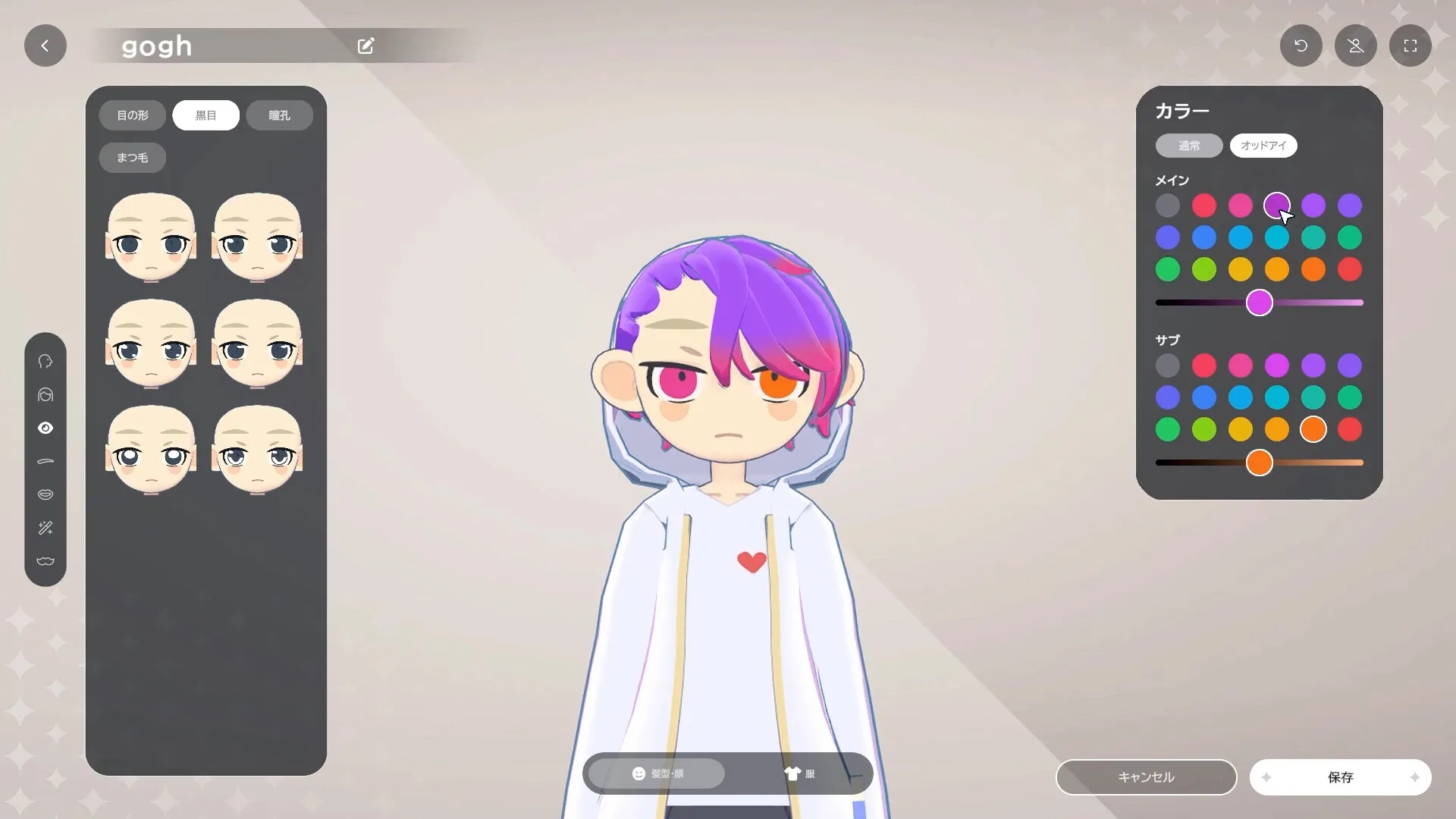
Gogh allows players to customize their avatar: colors, expressions, and “emotional animation styles” create a sense of personal identity. The more unique the avatar becomes, the more emotionally attached the user feels.
Custom identity strengthens the behavioral anchor. When players see their avatar’s calm pose, or its little spark of excitement before starting a session, their brain recognizes it as “my partner,” not just a feature.
In long-term usage, this identity bond becomes powerful. Players don’t want to disappoint their avatar, and this drives consistency in a way no checklist ever could.
4. The Flow State Guidance System
Gogh doesn't simply track time—it guides players toward flow state, the mental zone where you lose track of distractions and fully immerse in work.
Micro-Animations as Focus Signals
The avatar uses subtle motions to encourage steady breathing and improved concentration. This helps create a rhythm, much like the visual guides in meditation apps.
Building Routine
Long-term flow routines are reinforced through consistent session patterns. The avatar transitions between warm-up, focus, and cooldown phases, crafting a predictable structure that trains the mind to enter flow more easily.
5. Environmental Anchoring: Mood, Space, and Ambience
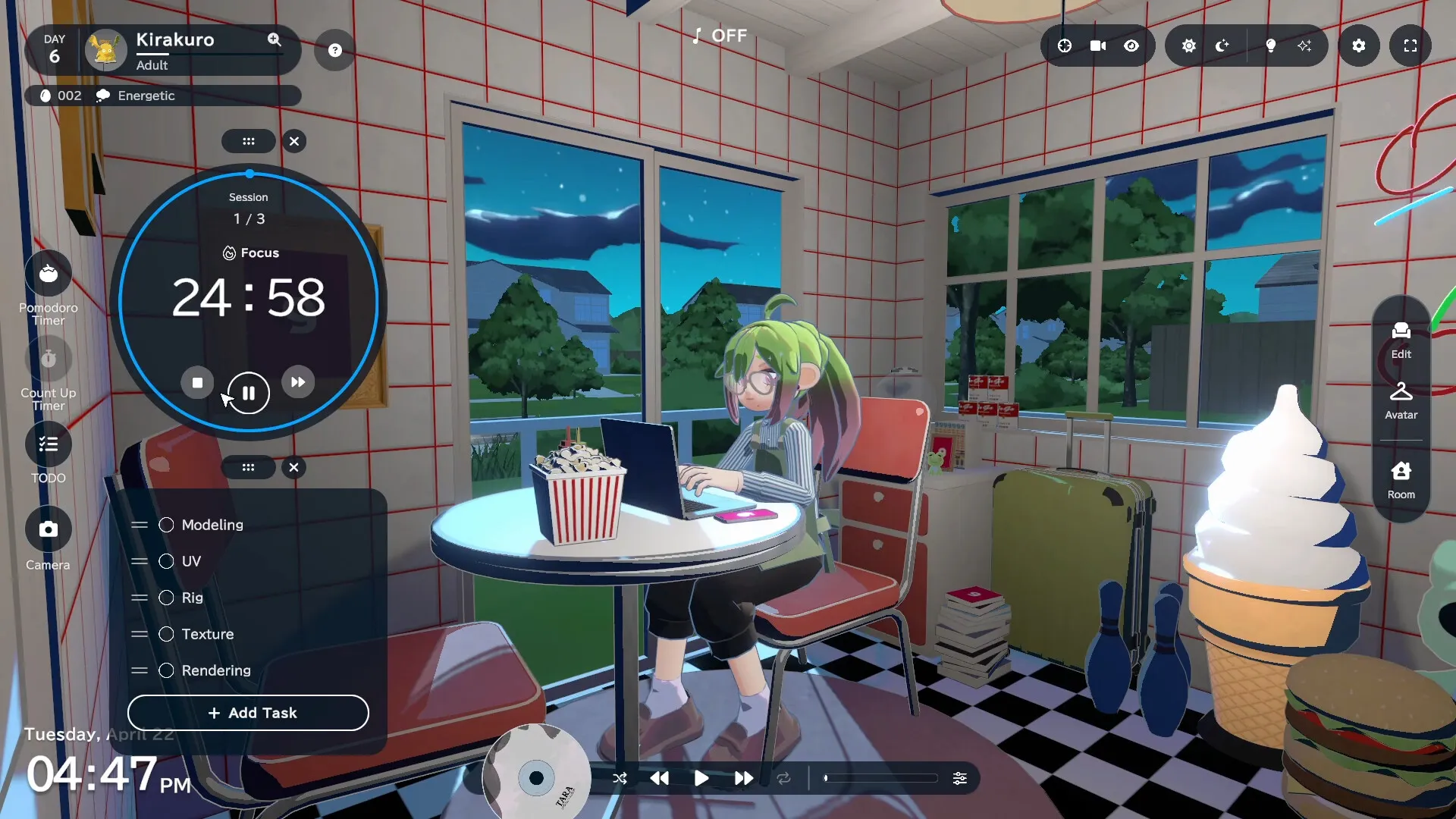
The avatar is not isolated—it exists within customizable digital environments that support psychological grounding.
Visual Environments
Different scenes provide different emotional tones: calm landscapes for deep work, vibrant neon for energetic sessions, minimalistic spaces for distraction-free focus.
Soundscapes and Rhythm
Ambient audio synced with avatar motions can slow the user’s breathing and reduce cognitive noise. The environment becomes a mental workspace, reinforcing focus through sensory consistency.
6. Community Presence and Social Accountability
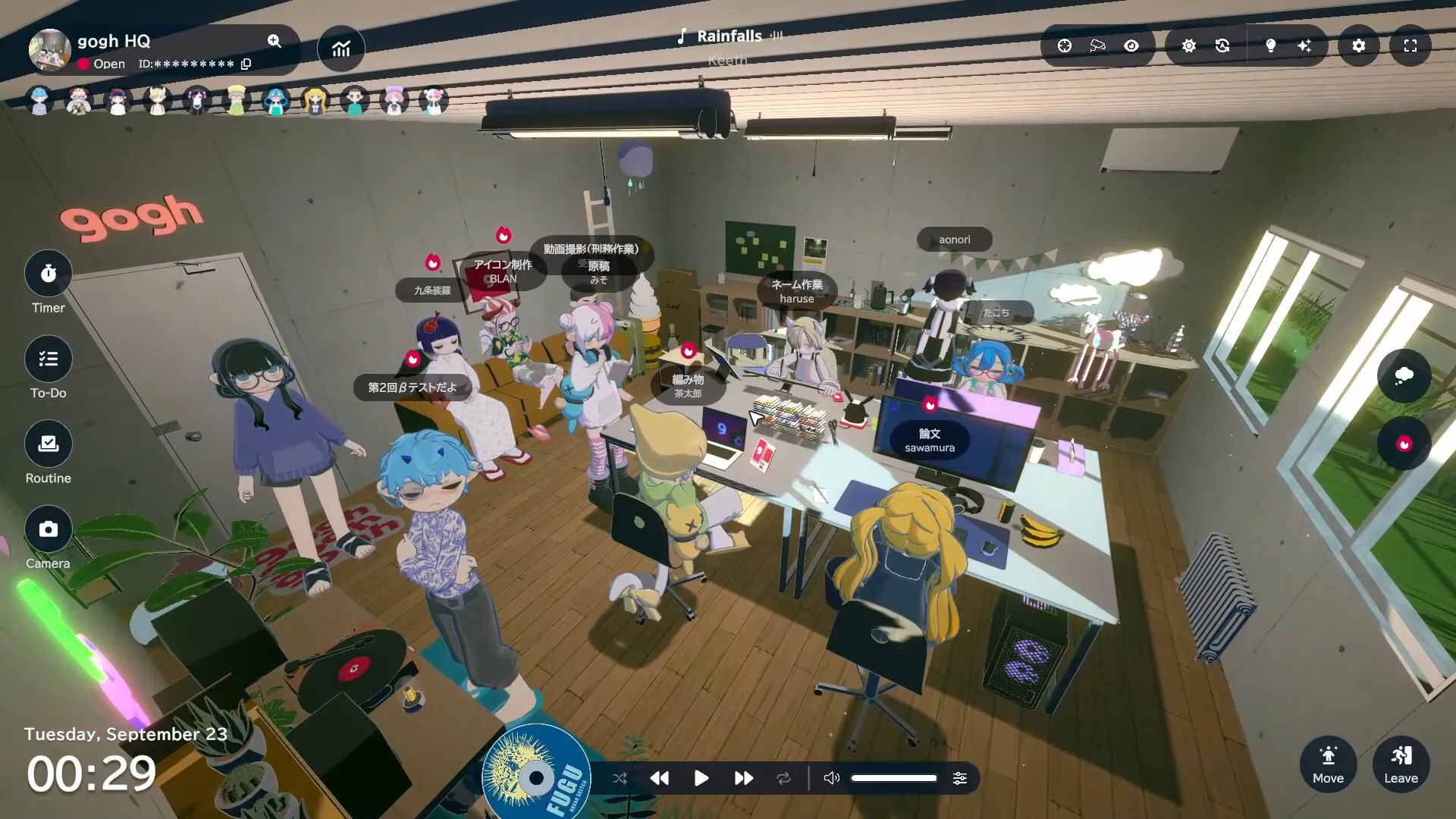
Gogh introduces a shared space where multiple avatars can work side by side. This turns a solitary activity into communal presence.
Shared Sessions
When players see others’ avatars working, it triggers mild competitive motivation and cooperative encouragement at the same time.
Social Accountability
Seeing your avatar among others encourages you to maintain focus—after all, your performance is visually represented in a space of peers. This creates a productive pressure that boosts consistency without being intrusive.
7. The “Session as Ritual” Mindset
Gogh encourages users to treat each focus session as a micro-ritual. Rituals create meaning, and meaning stabilizes habits.
Preparation Phase
Your avatar warms up, helping your mind transition from distraction to readiness.
Completion Phase
Celebratory animations or calm cooldown sequences allow your mind to recognize the completion of a task. This builds emotional closure, reducing burnout and creating anticipation for the next session.
The sense of ritual transforms repetitive productivity into a psychologically rewarding cycle.
8. Long-Term Behavioral Conditioning
Over weeks and months, players begin to associate their avatar with discipline and self-control. This is conditioning—the brain learns patterns through repeated reinforcement.
Formation of Automatic Habits
Opening the app becomes a mental cue: “now I focus.” This reduces startup resistance and procrastination.
Visual Memory Encoding
The avatar’s design, especially its color and movement, becomes a symbolic trigger encoded in memory. When players think of focusing, they often imagine the avatar—proof that the anchor has fully taken hold.
9. Emotional Regulation Through Avatar Interactions
The avatar doesn’t only represent focus—it also responds to stress, fatigue, and momentum.
Calm Animations
Slow breathing motions help regulate the player’s physiological state. This reduces anxiety before tackling difficult tasks.
Momentum Boost
Energetic motions at the start of a session engage motivation. The avatar’s enthusiasm often compensates for the user’s lack of it.
Through subtle emotional synchronization, the avatar helps players manage mood without explicit self-analysis.
10. The Avatar as a Future-Self Projection
One of the most profound aspects of Gogh is how the avatar becomes a projection of who the player wants to become.
Visualizing Progress
As the avatar evolves, gains new poses, and becomes more expressive, the player sees a symbolic representation of their personal growth.
Accountability to the Future Self
Players start focusing not just to complete tasks, but to help their future self—as represented by the avatar—achieve stability and progress. This creates a powerful long-term motivational framework rarely found in productivity apps.
Gogh: Focus with Your Avatar succeeds because it transforms productivity from a mechanical checklist into an emotional, immersive, and psychologically anchored experience. The avatar acts as a behavioral mirror, a partner, a visual habit trigger, and a projection of your future disciplined self. By anchoring focus through identity, ritual, emotional feedback, and environmental design, Gogh creates a powerful habit-forming ecosystem that leverages both psychology and artistry. The result is a productivity tool that feels alive, responsive, and deeply personal.